HomeAbout UsCapabilites
Services
Audit & Assurance
Financial Statement audit & attestationFinancial Reporting advisory
Advisory
Link 1Link 2Link 3
Tax
Link 1Link 2Link 3
Business Services & Outsourcing
Link 1Link 2Link 3

Service

Audit & Assurance

Tax & Regualtory

Advisory

Bussiness & Outsourcing

Audit & Assurance

Financial Atatement Audit & Attestation

Financial Reporting Advisory

Tax & Regualtory

Corporate Tax

Indirect Tax

Finacial Sector

Family Office,estate & succession Planing

Advisory

Mergers & acquisitions

Valuation

Due diligence

Corporate finance & investment banking

Start-up advisory

hgghhgdgfhhgd

IPO advisory

IT risk advisory & assurance

Sustainability & ESG

BFSI advisory

Management consulting

Business & Outsourcing

Finance & Accounting Outsourcing

Global Outsourcing

Compliance

Fund Accouting & Trust Accounting

Virtual CFO

Payroll

Services

Audit & Assurance
Tax & Regulatory
Advisory
Business & Outsourcing

Audit & Assurance

Financial Statement Audit & Attestation

Financial Reporting Advisory

Featured

What is the COSO framework?

September 24, 2024

Going Concern: What It Means for Your Business

August 8, 2024

Fraudulent Financial Reporting

June 19, 2024

Tax & Regulatory

Corporate Tax

Indirect Tax

Financial Sector  

Family, Office, Estate & Succession Planning

Featured

What is the COSO framework?

September 24, 2024

Going Concern: What It Means for Your Business

August 8, 2024

Fraudulent Financial Reporting

June 19, 2024

Advisory

Mergers & Acquisitions

Valuation

Due Diligence

Corporate Finance & Investment Banking

Start-up Advisory

Promoter Restructuring & Succession Planning

IPO Advisory

IT Risk Advisory & Assurance

Sustainability & ESG

BFSI Advisory

Management Consulting

Featured

What is the COSO framework?

September 24, 2024

Going Concern: What It Means for Your Business

August 8, 2024

Fraudulent Financial Reporting

June 19, 2024

Business & Outsourcing

Finance & Accounting Outsourcing

Global Outsourcing

Compliance

Fund Accounting & Trust Accounting

Virtual CFO

Payroll

Featured

What is the COSO framework?

September 24, 2024

Going Concern: What It Means for Your Business

August 8, 2024

Fraudulent Financial Reporting

June 19, 2024

Services

Services

Audit & Assurance
Tax & Regulatory
Advisory
Business & Outsourcing

Audit & Assurance

Financial Statement Audit & Attestation

Financial Reporting Advisory

Featured

What is the COSO framework?

September 24, 2024

Going Concern: What It Means for Your Business

August 8, 2024

Fraudulent Financial Reporting

June 19, 2024

Tax & Regulatory

Corporate Tax

Indirect Tax

Financial Sector  

Family, Office, Estate & Succession Planning

Featured

Invoice Management System (IMS) under GST

September 18, 2024

GST IMPORTANT ANNOUNCEMENTS via CIRCULAR NO. 230 to 233 dated. 11th Sept. 2024

September 18, 2024

GST IMPORTANT ANNOUNCEMENTS IN 54TH GST COUNCIL MEETING (September 9, 2024)

September 13, 2024

Advisory

Mergers & Acquisitions

Valuation

Due Diligence

Corporate Finance & Investment Banking

Start-up Advisory

Promoter Restructuring & Succession Planning

IPO Advisory

IT Risk Advisory & Assurance

Sustainability & ESG

BFSI Advisory

Management Consulting

Featured

Emerging Trends in AIFs: Key Regulatory Developments in FY 2025–26

February 11, 2026

TAXATION OF INFLUENCERS AND CONTENT CREATORS: THE NEW FRONTIER

June 24, 2025

Corporate Social Responsibility (CSR)

June 23, 2025

Business & Outsourcing

Finance & Accounting Outsourcing

Global Outsourcing

Compliance

Fund Accounting & Trust Accounting

Virtual CFO

Payroll

Featured

LEAVE & LAW POLICIES FOR EMPLOYEES IN INDIA

May 9, 2024

SOCIAL SECURITY LAWS- PF & ESIC

April 20, 2024

SOX Compliances

January 6, 2023

Audit & Assurance
Financial Statement Audit & AttestationFinancial Reporting Advisory
Advisory
Mergers & AcquisitionsValuationDue DiligenceCorporate Finance & Investment BankingStart-up AdvisoryPromoter Restructuring & Succession Planning IPO Advisory IT Risk Advisory & AssuranceSustainability & ESGBFSI advisoryManagement Consulting
Tax & Regulatory
Corporate TaxIndirect taxFinancial sector  Family, office, estate & succession planning
Business & Outsourcing
Finance & Accounting OutsourcingGlobal outsourcingComplianceFund accounting & Trust AccountingVirtual CFOPayroll
Solutions
Multinational CorporatesIndian CorporatesStartups
BlogsBlogsCareersContact UsContact Us
Schedule a consultation

Emerging Trends in AIFs: Key Regulatory Developments in FY 2025–26

By
Team Bilimoria
February 11, 2026

The Alternative Investment Fund (AIF)ecosystem is moving towards greater institutionalisation and regulatory maturity. SEBI’s notifications and amendments in FY 2025–26 is set to impact fund operations, governance, and structuring in FY 2026–27, reflecting a shift towards differentiated regulation, stronger governance, and professionalised fund management

Key regulatory developments include:

·       Introduction of Accredited Investors (AI) only schemes and enhanced flexibilities for Large Value Funds (LVFs)

·       Formalisation of co-investment structures within the AIF framework

·       Mandatory onboarding of Accredited Investors for Angel Funds

·       Strengthening of compliance capability at the Fund manager level

·       Mandatory digital accessibility requirements for regulated entities


1) Introduction of Accredited Investors (AI) only schemes and enhanced flexibilities for Large Value Funds (LVFs):

SEBI has strengthened the AIF framework by permitting AI-only schemes exclusively for Accredited Investors and within which Large Value Funds (LVFs) operate as a specialised subset. An AI-only fund is one where all investors (other than the manager/sponsor and their employees or directors) are Accredited Investors, while an LVF is an AI-only AIF in which each investor commits at least ₹25 crore, reflecting higher investor sophistication and risk appetite.

·       Reduced investor-protection compliance: AI-only schemes benefit from lighter regulatory requirements due to investor sophistication.

·       Key team qualification relaxed: Professional certification under Regulation 4(g)(i) not required for AI-only funds.

·       Pari-passu flexibility: Exemption from strict pari-passu norms extended to all AI-only funds, enablingdifferential rights via side letters.

·       Investor count relief: Accredited Investors excluded from the 1,000-investor cap for all AIF schemes.

·       Extended tenure: AI-only funds permitted tenure extension of up to 5 years, inclusive of pre-conversion extensions.

·       Continuity of AI status: Accredited Investor status at onboarding continues for the entire scheme tenure.

·       Governance simplification: Trustee obligations shifted to the manager for AI-only funds.

Further, SEBI has exempted LVFs from the standard Placement Memorandum (PPM) template and the annual auditof PPM terms, without requiring specific investor waivers, significantly easing compliance requirements.

‍

2) Formalisation of Co-investment Structures

Another key development is the formalisation of co-investment structures within the AIF framework.

AIFs frequently participate in transactions where certain LPs wish to invest additional capital alongside the fund. Historically, such co-investmentswere executed outside the AIF structure—typically through separate vehicles or Portfolio Management Services (PMS) accounts—due to regulatory limitations.

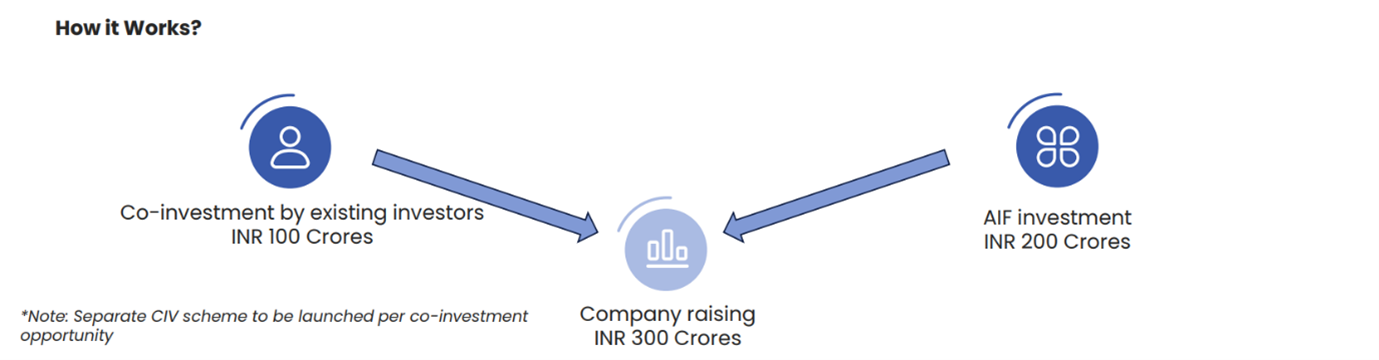
To address this, regulators now permit Category I and Category IIAIFs to facilitate co-investments through a dedicated Co-Investment Vehicle (CIV) within the AIF framework itself. This facility is available only to accredited investors of the same AIF scheme.

Further, an investor’s co-investment in an investee company through CIV sis capped at three times the investor’s contribution made through the main AIF scheme in that investee company.
 

3) Overhaul of Angel Fund Regulations

Angel Funds have also undergone a comprehensive regulatory over haulaimed at improving governance, reducing ambiguity and strengthening investorprotection. Key changes include:

1.     Accredited Investors only: Angel Funds restricted to onboarding Accredited Investors.

2.     Deal size flexibility: Investment per company allowed from ₹10 lakh to₹25 crore.

3.     First close threshold: Minimum 5 Accredited Investors required within 12 months of SEBI approval.

4.     Entry barriers lowered: Minimum corpus and minimum investor commitment removed (Sept 2025).

5.     Structural simplification: No separate schemes per investment; SEBI term sheet filing removed (internal records to be maintained).

6.     Skin-in-the-game revised: Sponsor/manager to invest 0.5% per deal or ₹50,000 whichever is higher, shifting from fund-level to deal-level alignment.

7.     PPM audit relief: Annual audit required only if total investments exceed ₹100 crore.


4) Strengthening Governance and Compliance Capability

Alongside fund structuring reforms, the Securities and Exchange Board of India (SEBI) has strengthened governance expectation sat the AIF manager level by mandating that Compliance Officers obtain the NISM Series III-C (Securities Intermediaries Compliance – Fund) Certification. The requirement becomes effective January 1, 2027, requiring managers to either upskill existing personnel or onboard certified professionals.


5) Digital Accessibility Requirements

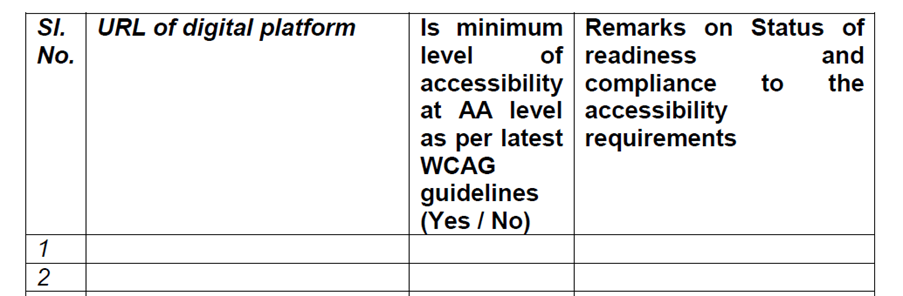
SEBI has mandated digital accessibility compliance for all regulated entities under the Rights of Persons with Disabilities framework. Managers must identify investor-facing digital platforms and shall submit a status of their readiness and compliance to the accessibility requirements for each of their digital platforms latest by March 31, 2026.

The REs reporting to SEBI shall share the status on the email id digital_acc@sebi.gov.in.

Below is the format in which reporting to be made:
Conclusion:

Taken together, these reforms signal a maturing regulatory environment that balance sinvestor protection with operational flexibility. Over the medium term, thesemeasures should enhance investor confidence and support the sustainable growthof India’s alternative investment ecosystem.
Explore More

February 11, 2026

Team Bilimoria

How Artificial Intelligence Is Shaping the Future of Tax Regulation in India

Numerous financial records processed annually, lakhs of tax notices generated and thousands of crores in tax revenue collected, the complexity and scale of regulation have reached unprecedented levels. Traditional methods can no longer keep pace with such scale of data. Therefore, to deal with new emerging problems in tax regulation the tax authorities have started to integrate artificial intelligence to automate the tax operations and fundamentally redefining them. From predictive analytics that flag anomalies, to intelligent systems that auto-populate returns and resolve queries in real time, AI is reshaping the very foundation of tax regulation in India. ‍

Read More

February 11, 2026

Team Bilimoria

DEEMED EXPORTS UNDER GST

Export of goods, in common parlance, means taking goods outside India. The process of supplying the goods(produced/manufactured in the country) on an international scale is known as Export. Such supply of goods and service contribute to the growth of an economy and thus enjoy the perk of being treated as zero-rated supplies. Such supplies are treated as zero-rated supplies under GST. However, there is a certain category of supplies, as notified by the Central Government, wherein the supply is treated as an export, even if the goods do not leave the national borders. The Central Government have notified such categories of supplies of goods as deemed exports. This means that such supplies shall be treated as exports even if such goods are not taken outside India.

Read More

Read All Blogs

BILiMORIA MEHTA & CO. is a leading Chartered Accountancy firm with a rich legacy of serving clients in India and internationally.

info@bilimoriamehta.com

+91 (22) 6697-2111

Company

  • About Us
  • Contact Us
  • Careers
  • Resources

Solutions

  • for Startups
  • for Indian Corporates
  • for Multinational Clientele

Solutions

  • Multinational Corporates
  • Indian Corporates
  • Startups

Services

  • Audit & Assurance
  • Tax & Regulatory
  • Advisory
  • Business & Outsourcing

Resources

  • Blogs
  • Regulatory Updates
© 2024 BILiMORIA MEHTA & Co. All Rights Reserved
Privacy PolicyTerms & Conditions