How Artificial Intelligence Is Shaping the Future of Tax Regulation in India
Introduction
Numerous financial records processed annually, lakhs of tax notices generated and thousands of crores in tax revenue collected, the complexity and scale of regulation have reached unprecedented levels. Traditional methods can no longer keep pace with such scale of data. Therefore, to deal with new emerging problems in tax regulation the tax authorities have started to integrate artificial intelligence to automate the tax operations and fundamentally redefining them. From predictive analytics that flag anomalies, to intelligent systems that auto-populate returns and resolve queries in real time, AI is reshaping the very foundation of tax regulation in India.
What is Artificial Intelligence (AI) ?
Imagine a robot that's designed to make paper clips by bending a small strip of wire. It takes the few inches of wire and makes the exact same three bends every single time. As long as it keeps being given wire, it will keep bending it into paper clips. Give it a piece of dry stick, it will just snap it. It has no capacity to do anything except bend a strip of wire. It could be reprogrammed, but it can't adapt to a new situation by itself.
Now AI on the other hand is able to learn and solve problems in ways that can seem human. Computers generally doesn’t have ability to independently think, empathies or reason. However, scientists have developed systems that can perform tasks which usually require human intelligence, trying to replicate how people acquire and use knowledge. AI programmers can process large amounts of data, identify patterns and follow detailed instructions about what to do with that information.
New Era of Tax Regulation
The Indian tax system has gone through a substantial change over the last decades from a manual and paper-based structure towards more modern& tech-driven and automated framework. Such changes have led towards fast paced tax regulation and have improved the taxation system. With the tax landscape evolving at lightning speed, many taxpayers find themselves struggling to keep pace with the shifting rules and rising compliance demands.
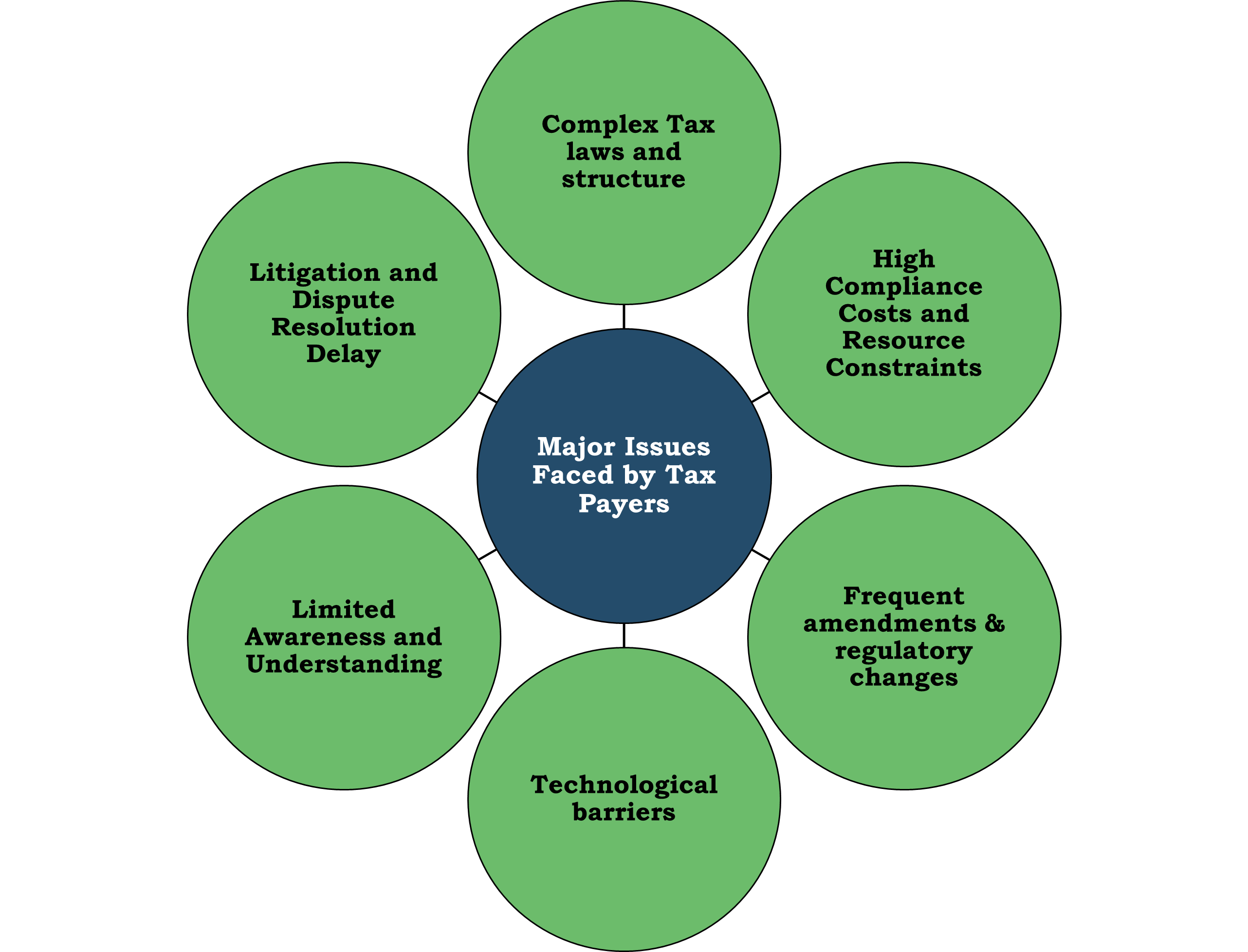
In today’s dynamic landscape, AI is emerging as a game changer by enhancing both existing technologies and human capabilities, particularly in mathematical accuracy, reducing oversights and rapidly addressing various contingencies.
The demand for personalized taxation is rapidly growing, and embracing a data-driven future can offer significant benefits to taxpayers. These benefits to the taxpayers could range from prefilled tax filings that boost compliance to automated tax payments to AI tax chatbots that could act as smart assistants.
This article discusses the opportunities that AI could open up for the tax function of the future however, challenges related to the ethical use of AI and privacy concerns would also need to be simultaneously solved.
AI integration into Tax Regulation
Historically, tax enforcement has relied heavily on manual processes, including audits and on-site inspections, which are time-consuming and resource-intensive. These methods are not only slow, but they often result in a high-rate inaccurate hits, where businesses are wrongly flagged for non-compliance. As the current trend for tax regulation is changing, AI is starting to be implemented in tax regulation in multiple layers, primarily through:
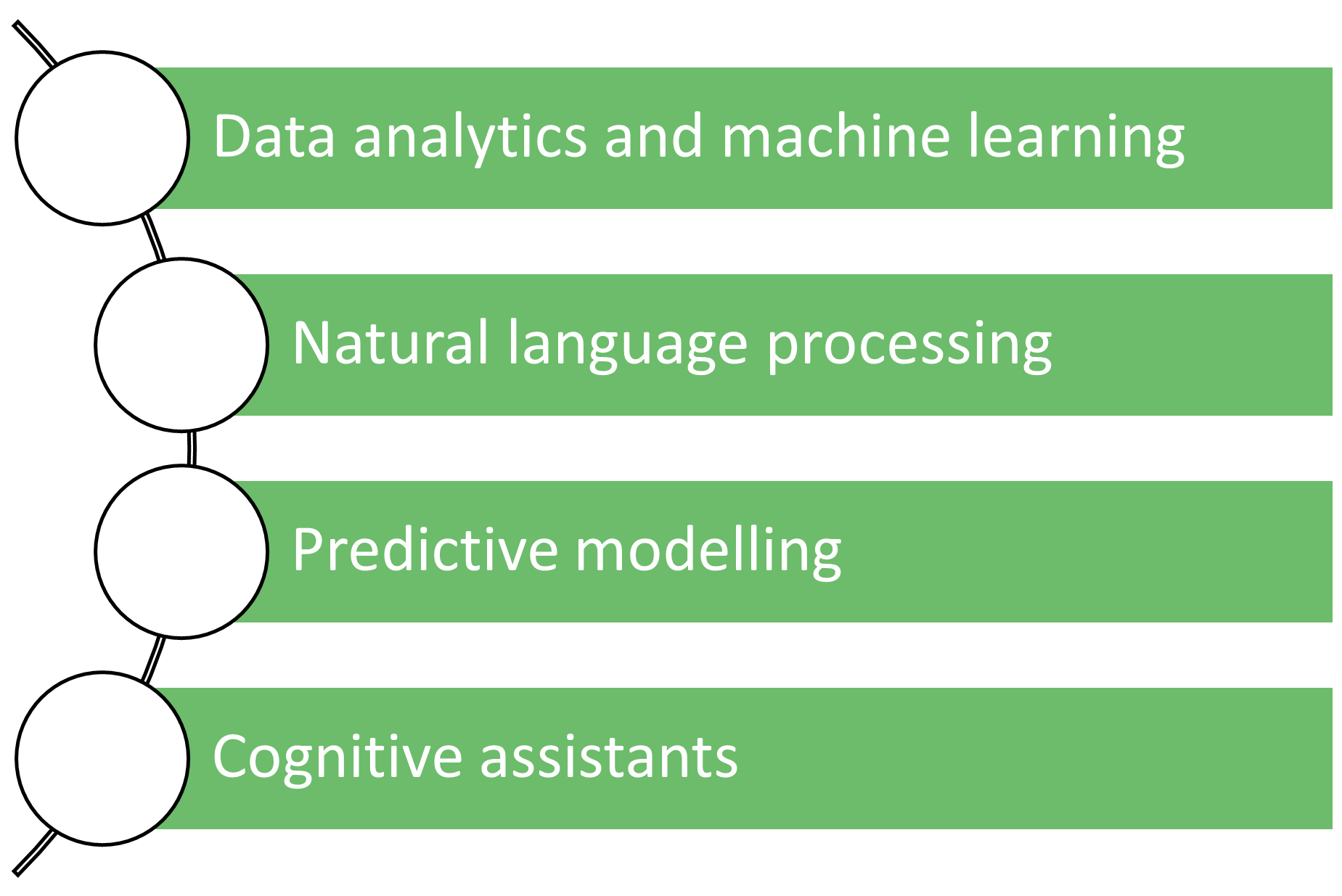
Data analytics and Machine learning:
These tools analyze large amounts of financial data to detect suspicious patterns, identify tax evasion risks, and automate regulative checks. Projects like GSTN and Insight Portal use predictive analytics and real-time monitoring to improve tax collection, reduce fraud, and streamline processes for both taxpayers and officials.
Natural language processing:
Natural language processing (NLP) is a branch of artificial intelligence that enables computers to understand, interpret, and process human language. NLP can enable systems to understand, interpret complex tax process and unstructured documents with highspeed and accuracy. By automating data extraction, anomaly detection and regulatory checks NLP can help reduce errors and ensure continuous compliance.
Predictive modelling:
Predictive modelling uses previous year’s tax data and advanced algorithms to forecast future tax outcomes, such as identifying potential non-compliance, estimating tax liabilities, and detecting fraud risks. In India, tax authorities apply predictive models to analyze taxpayer’s behavior, prioritize audits, and send automated alerts, making tax administration more proactive and efficient.
Cognitive assistants:
Cognitive assistants are AI-powered systems designed to enhance human intelligence by helping with decision-making, problem-solving, and task execution beyond ordinary human capabilities.
With AI, machine learning algorithms, and advanced data analytics, tax agencies can now automate much of the compliance identification process. This new approach reduces the need for manual audits, minimizes human error, and accelerates the process of identifying fraudulent or non-compliant businesses.
Current Industry Implementation
1. Insight portal
Launched in 2017,Project Insight stands as one of India’s most transformative investments in AI-enabled tax governance. With an estimated budget of ₹1,000 crore, the project aims to establish an advanced data analytics platform capable of improving transparency, compliance and revenue collection within the income tax ecosystem. At its core, Project Insight is designed to utilize artificial intelligence and machine learning to monitor and analyze a wide range of financial data.
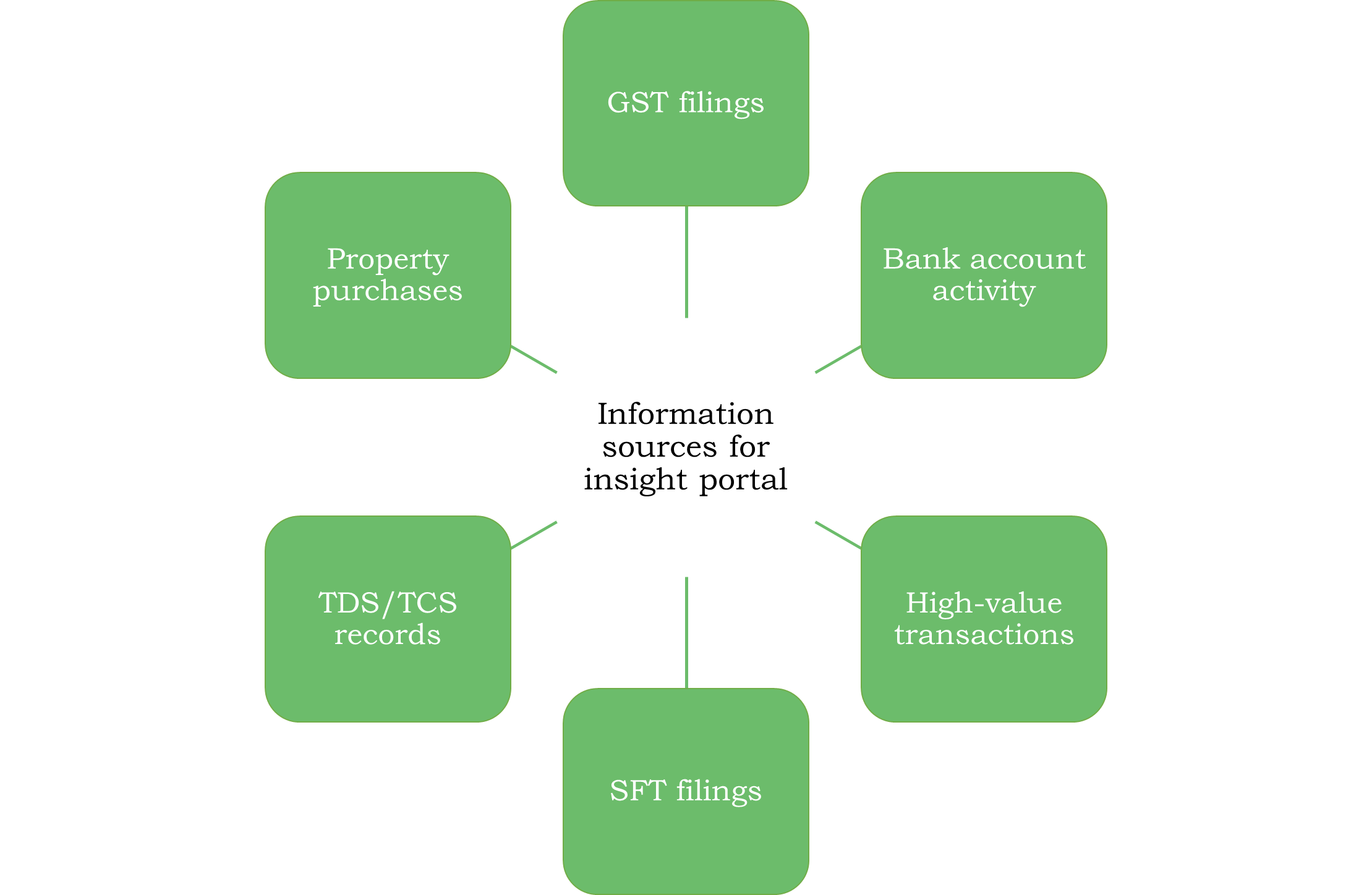
The platform functions by identifying anomalies, detecting patterns of potential tax evasion, and building risk profiles of taxpayers. When discrepancies are found, the system automatically triggers non-intrusive alerts and nudges such as emails or SMS notifications encouraging voluntary correction and compliance without immediately resorting to enforcement measures.
1. AIS &TIS Simplifying Tax Regulation
Income Tax department’s Annual Information Statement (AIS) and Taxpayer Information Summary (TIS) use artificial intelligence to aggregate and eliminate duplicate data from multiple sources such as banks, employers, mutual funds to offer accurate, pre-filled financial summaries for ITR filing.
To support taxpayers and enhance the robustness of digital tax filing, AIS and TIS leverage various AI capabilities such as:
Machine learning flags mismatches between data
Natural language processing (NLP) ensures a user-friendlyexperience via the e-filing portal.
Predictive analytics and anomaly detection help spot potentialtax evasion, encouraging voluntary compliance.
Automating data processing and enabling real-time corrections, AIS/TIS streamlines filing and supports India’s digital tax vision.
2. UP’s AI-Powered Engine for GST Administration and Recovery
In FY 2023–24, the Uttar Pradesh State Tax Department introduced AI-powered notice generation system, developed in partnership with IIT Lucknow at a cost of just ₹18 lakhs, the system utilizes artificial intelligence to identify mismatches and anomalies in GST return filings. Based on automated data mining and pattern recognition, the tool has already generated over six lakh notices, resulting in additional GST deposits of ₹980 crore in a single financial year.
Integration with Business Intelligence and Financial Analytics(BIFA) and NHAI’s real-time e-Waybill system allows the platform to cross verify movement of goods across toll plazas and curbs bogus ITC claims and red flag suspicious transactions. As a low-cost, high-impact initiative, the AI deployment has driven a 21% increase in annual state GST revenue, placing Uttar Pradesh among the top-performing states in tax technology innovation.
3. Generative AI in taxation
Generative AI is emerging as a transformative force in tax administration unlike traditional AI, Gen AI not only processes data but also drafts documents, reports and complex legal briefs. At its core, it consists of neural network models that consume vast amounts of training data, analyse it for correlations and patterns, and use these patterns to make predictions about future state. This not only enhances the speed and consistency of departmental workflows but also supports taxpayers with intelligent assistants that can answer queries, draft responses, and ensure timely compliance. As tax authorities explore multilingual chatbots, AI-generated assessment orders, and natural language interfaces for data queries, generative AI is set to redefine both back-end efficiency and taxpayer experience in the years ahead.
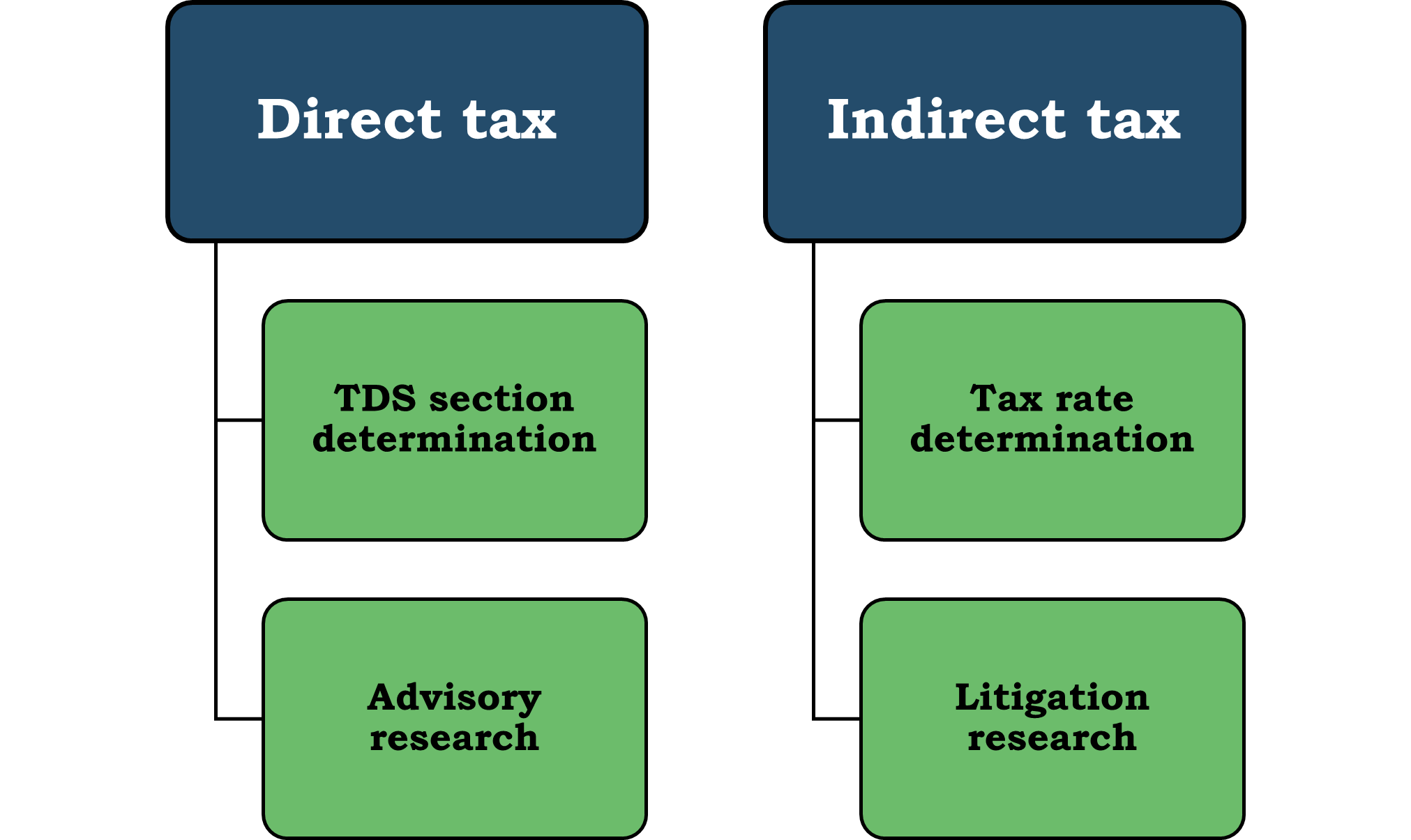
Potential use cases of Gen AI in the tax function
Conclusion & future trends
As India moves toward a digital-first economy, artificial intelligence is no longer a distant concept. From detecting mismatches in GST returns to drafting responses through AI agents, machines are now learning and evolving with every interaction.
But the real promise of AI isn’t about replacing people it’s about empowering them. Tax officers can focus on strategy rather than paperwork, while taxpayers benefit from smarter and simpler systems that reduce errors and save time.
Such AI integration in tax regulation caries an inherent risk of confidentiality. AI-driven tax administration must uphold privacy, ensuretransparency, and foster fairness. The future won’t just depend on better tech but on ethical and regulatory wisdom.
In this new era, compliance won’t feel like a burden it’ll be seamlessly built into the system, creating a faster, and more intelligent tax experience for all.
Authors:
Vishal Kothari
Director | LinkedIn Profile
Nitesh Jha
Manager | LinkedIn Profile
Divya Gahlot
Senior Consultant | LinkedIn Profile
Neuroy Gonsalves
Associate Consultant | LinkedIn Profile
.svg)